
Agentic AI: The Revolution of Autonomous Intelligent Systems
Agentic AI represents a paradigmatic shift in the field of artificial intelligence, where AI systems are moving from reactive tools to autonomous agents capable of independent decision-making and action. Unlike traditional AI models that require human instructions for every action,Agentic AIfunctions as an independent entity capable of planning, decision-making processes, and adapting to changing conditions with minimal human oversight
Definition and basic characteristics
Agentic AI designate artificial intelligence systems that canautonomously set goals, plan steps, and execute taskswithout constant human intervention. These systems are characterized by the ability to perceive their environment, analyze complex situations, and make decisions to achieve specific goals.
An engineer interacts with a robotic arm displaying holographic data, symbolizing the integration of AI agents in robotics.smythos
Key features of Agentic AI include:
- AutonomyThe ability to function independently without constant human instructions.
- AdaptabilityContinuous learning and adapting to new situations
- TargetnessSeparate determination and monitoring of objectives
- Complex decision-makingAnalysis of several factors and potential outcomes
- Multilevel planningThe ability to break down complex tasks into smaller steps.
Comparison with traditional AI systems
Agentic AI fundamentally differs from traditional AI models in several key aspects. While traditional AI systems operate based on predefined rules and require explicit instructions, Agentic AI demonstrates a high degree ofautonomy and contextual understanding.
Traditional AIis designed for specific, predefined problems within a limited context. These systems respond to known inputs with predictable outputs and excel in rule-based tasks. In contrast,Agentic AIbuilds on this foundation and expands it towards adaptability and initiative in real time.
Generative AIfocuses on content creation based on learned patterns, but remains reactive - it generates outputs only based on user instructions. Agentic AI goes further byproactively monitors goalsand performs actions without waiting for instructions.
Market trends and growth
The market for Agentic AI is experiencingexplosive growthwith projected growth from 5.29 billion USD in 2024 to 41.3 billion USD by 2030, representing a compound annual growth rate (CAGR) of approximately 41.5%
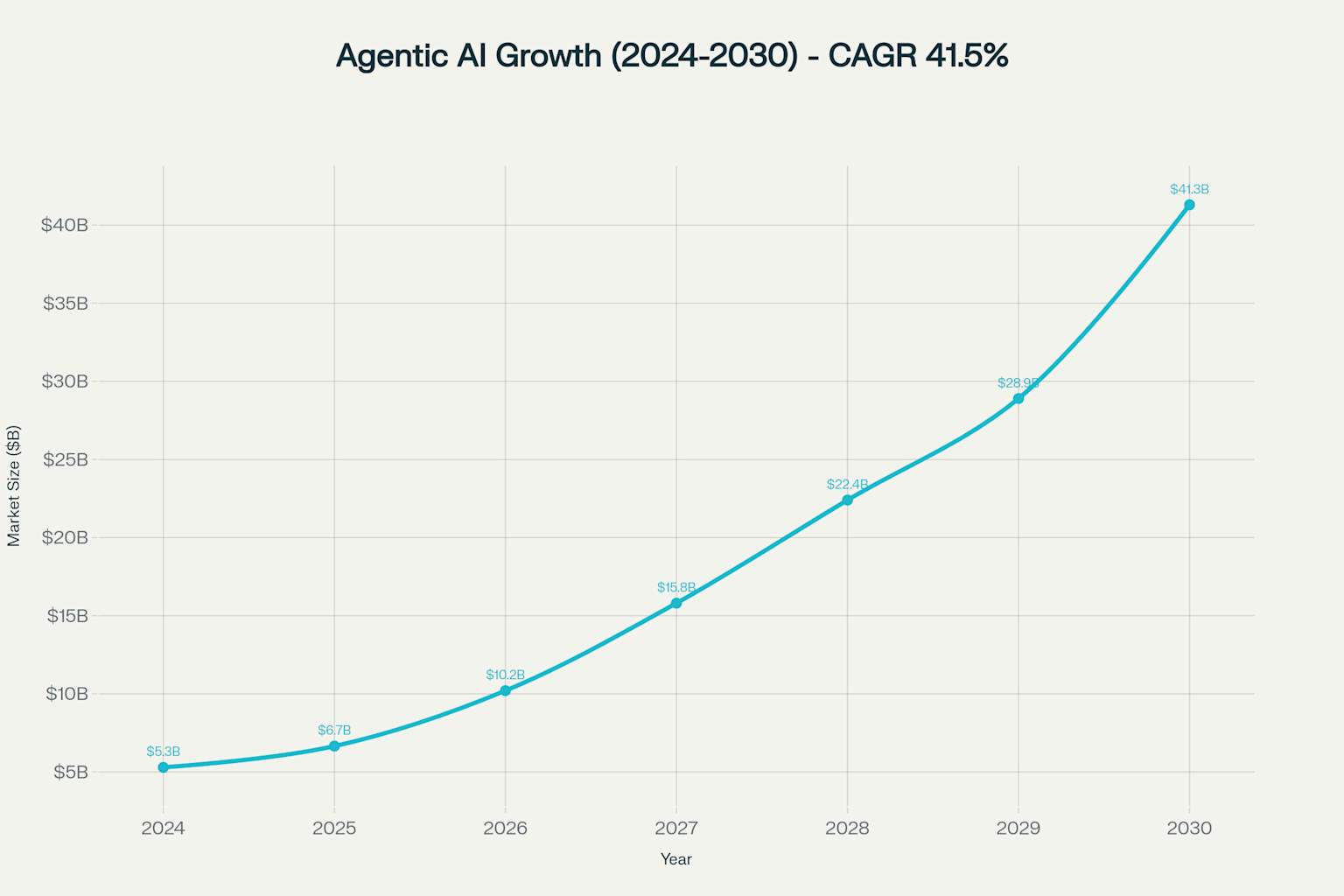
Agentic AI Market Growth Projection showing exponential growth from $5.29 billion in 2024 to $41.3 billion by 2030
Gartner predicts that by 2028 there will be33% of enterprise software applicationsto include Agentic AI, compared to less than 1% in 2024. At the same time, it is expected that15% of everyday work decisionswill be carried out autonomously through Agentic AI by 2028.
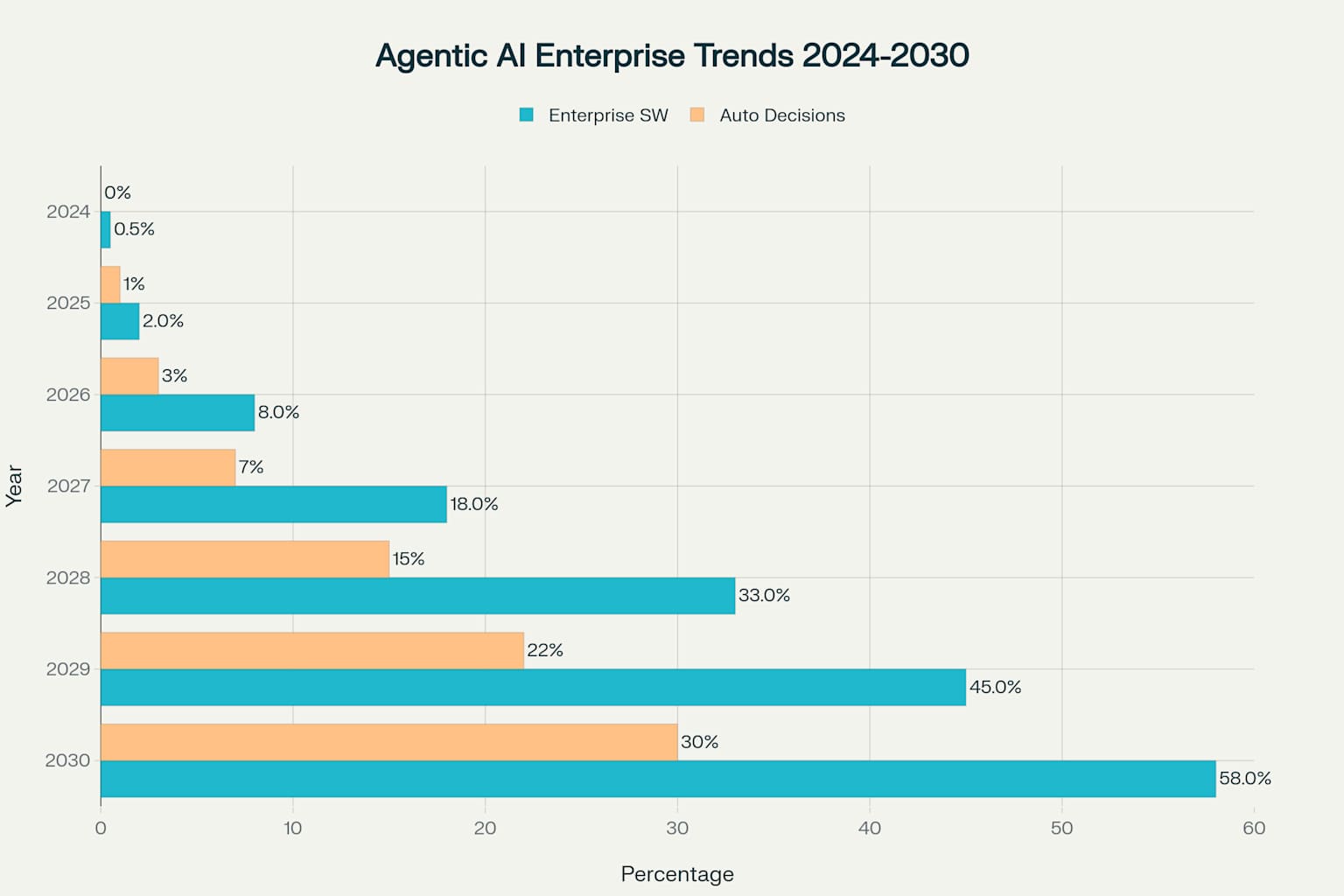
Agentic AI Enterprise Adoption Trends showing projected growth in software integration and autonomous decision-making from 2024-2030
The main growth factors include:
- Advances in large language models (LLM)
- Growing demand for business automation
- Wider adoption of AI technologies across industries
- Improvement of computing infrastructure and algorithms
Key applications and use cases
Agentic AI finds application in a wide range of industries, transforming the way organizations approach automation and decision-making.
Customer service
AI agents canautonomously solve 80% of common problemscustomers without human intervention. Unlike traditional chatbots that rely on pre-programmed scripts, Agentic AI learns from context and adapts to the unique needs of customers.
Healthcare
In healthcare, autonomous agents canmonitor patients in real timeanalyze health data and even initiate preventive measures without direct input from healthcare personnel
Financial services
AI agents in financethey manage business portfoliosThey optimize investment strategies and predict market trends. These systems analyze vast amounts of financial data in real time and make quick decisions based on complex models.
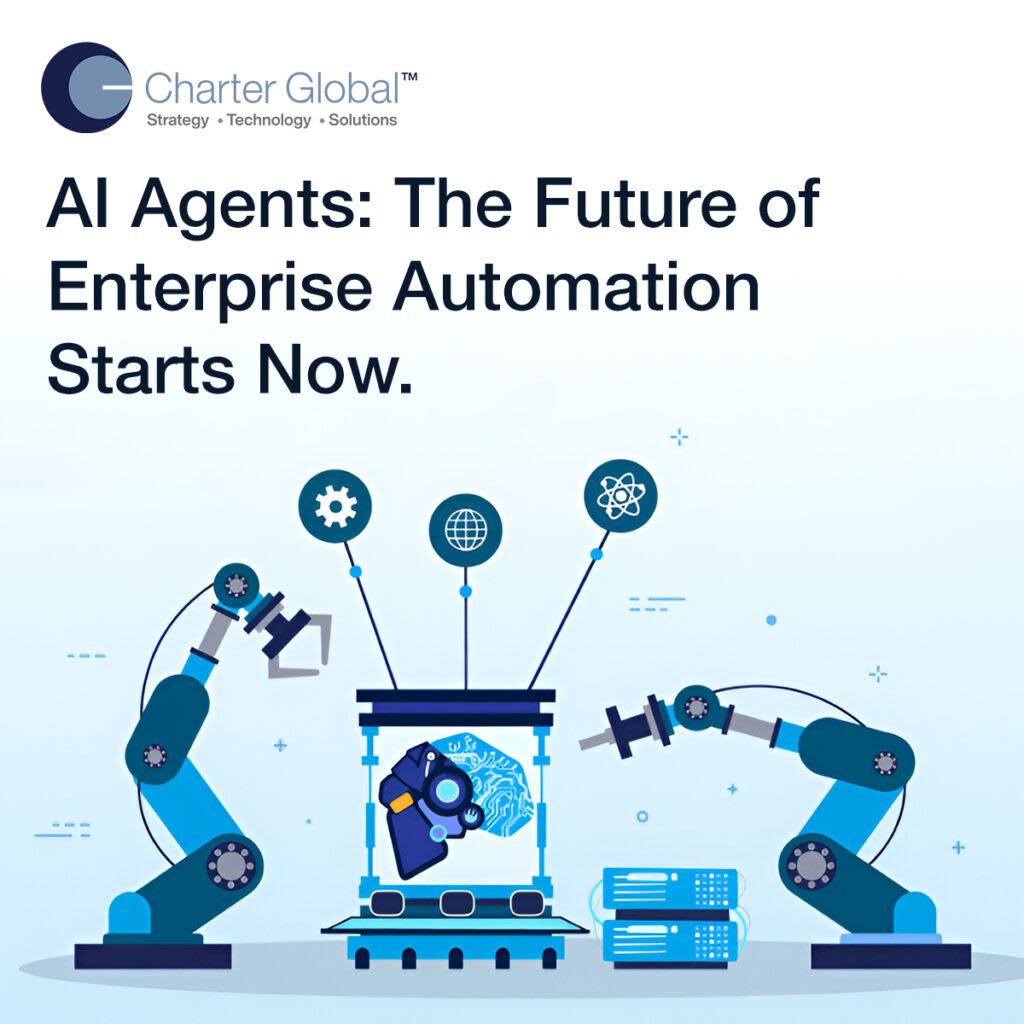
AI agents are poised to drive the future of enterprise automation, as depicted by robotic arms and AI brain iconography.charterglobal
IT operations and software development
Agentic AI is revolutionizing the software lifecycle byautomates code generationIt provides real-time recommendations and manages application deployment. Developers can utilize AI agents for code testing, bug identification, and performance optimization.
Development frameworks and tools
There are several popular frameworks for the development of Agentic AI systems, each offering unique advantages.
LangChain
LangChainIt is a modular open-source framework designed to simplify the development of applications powered by large language models. It provides extensive support for integration with third parties and is ideal for projects requiring flexibility and scalability.
AutoGen
AutoGenMicrosoft focuses on collaborative AI applications, where multiple agents work together to solve tasks. This framework enables structured message exchange between agents with explicit role assignment.
CrewAI
CrewAIspecializes in creating intelligent agents capable of collaboration, task sharing, and action optimization through real-time communication.
Microsoft Semantic Kernel
This framework is designed for enterprise teams that integrate agent capabilities into existing applications, especially within the Microsoft ecosystem.